Why Exit Planning Should Start Years Before You Sell Your Business
June 11, 2026 •
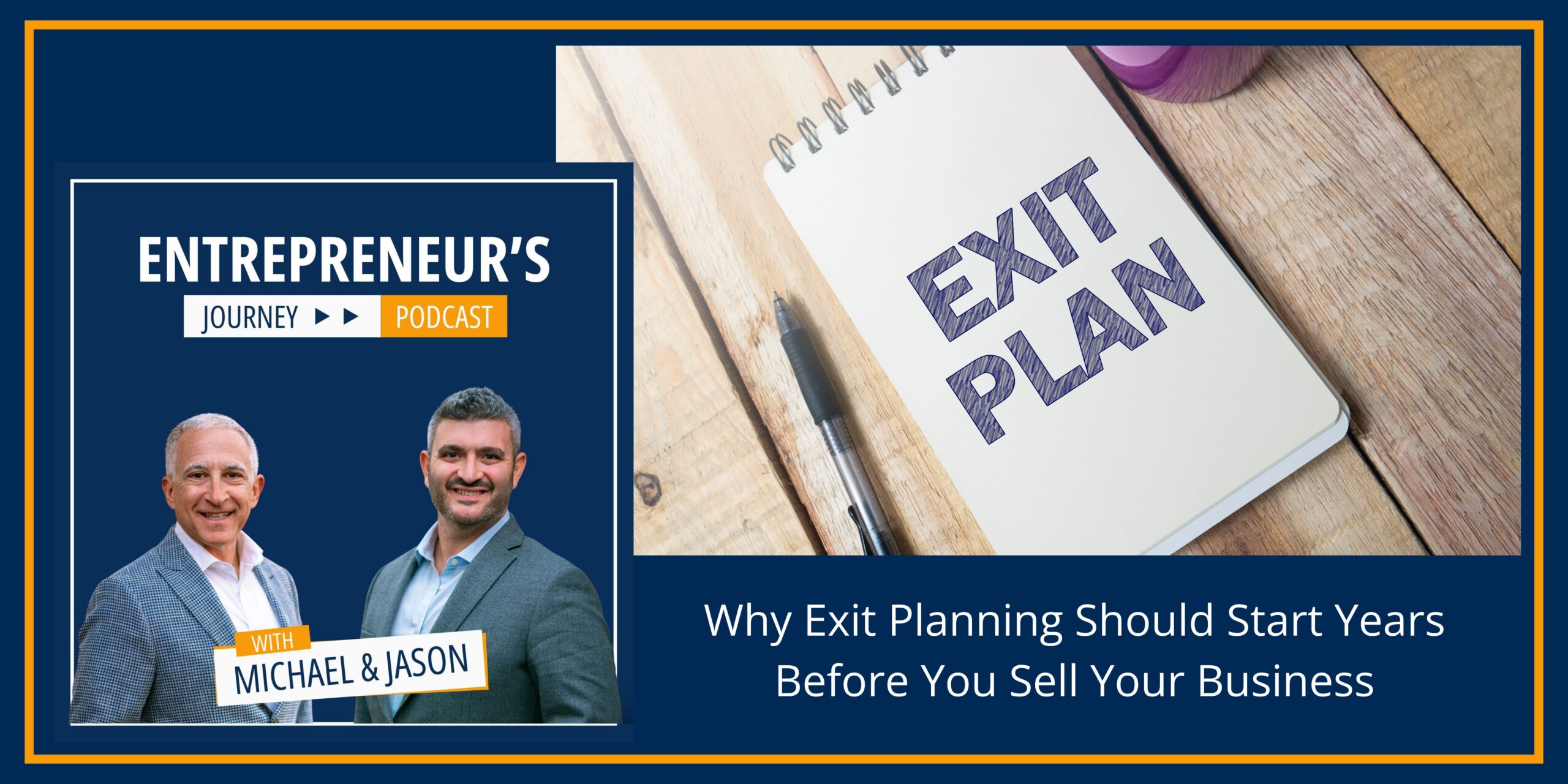
Michael and Jason are back in the podcast studio to discuss the importance of building a transition-ready business long before an owner decides to exit. Jason shares insights from his Certified Exit Planning Advisor (CEPA) coursework and explains how business owners can maximize the value of their companies through proactive planning, operational improvements, and aligning their personal, business, and financial goals.
Michael and Jason break down the concept of the “three legs of the stool” — personal, business, and financial planning — and explain why successful exits depend on all three being aligned. They also discuss how business valuation multiples work, why systems and processes increase company value, and how many owners unintentionally leave money on the table by waiting too long to prepare.
Tune into this episode to also learn:
● Why exit planning should be treated as an ongoing business strategy — not a last-minute event.
● How systems, leadership, and culture can dramatically increase business valuation multiples.
● Why many business owners don’t truly know what their company is worth.
● How proactive planning creates more flexibility, better outcomes, and less stress during a transition.
What we discussed
● [00:01:17] Defining what “exit planning” means for business owners.
● [00:03:01] Jason discusses earning his Certified Exit Planning Advisor (CEPA) designation.
● [00:04:51] Why exit planning should be viewed as a long-term business strategy.
● [00:06:57] Understanding business valuation and the importance of EBITDA.
● [00:08:45] Why most business owners don’t know the true value of their company.
● [00:10:04] How systems, processes, and leadership teams increase valuation multiples.
● [00:12:42] A simple breakdown of EBITDA and how business valuation multiples work.
● [00:15:08] How improving operations can dramatically increase business value without increasing profit.
● [00:15:52] Internal succession vs. external sale options for business owners.
● [00:17:35] The number one reason many business sales fall apart.
● [00:18:53] Why balancing personal, business, and financial goals matters before exiting.
● [00:19:55] Why business owners should start these conversations early — even if they are years away from selling.
● [00:21:37] The importance of building a team of advisors and specialists around the owner.
● [00:23:48] “A transition-ready business is a valuable business.”
3 Things To Remember
- Exit planning is not just about selling your business — it’s about building a stronger, more valuable company over time.
- Systems, documented processes, leadership teams, and reduced owner dependency can significantly increase business valuation multiples.
- The earlier business owners begin planning, the more options and flexibility they create for themselves, their employees, and their families.
Memorable moments
(00:04:51) “Good exit planning is literally a business strategy.”
(00:10:55) “Most business owners think more revenue equals more value. That’s only part of the equation.”
(00:15:22) “At the same profit, you could dramatically increase the value of your business just by improving the systems and processes.”
(00:23:48) “A transition-ready business is a valuable business.”
Useful Links
Connect with Michael Pallozzi: pallozzi@hfmadvisors.com | LinkedIn
Connect with Jason Gabrieli: jgabrieli@hfmadvisors.com | LinkedIn
Exit Planning Institute: https://exit-planning-institute.org
Like what you’ve heard…
- Subscribe to our BuiltWealth™ Newsletter HERE

102 WEST HIGH STREET, SUITE 200
GLASSBORO, NJ 08028
HFM Investment Advisors, LLC is a registered investment adviser. All statements and opinions expressed are based upon information considered reliable although it should not be relied upon as such. Any statements or opinions are subject to change without notice. Information presented is for educational purposes only and does not intend to make an offer or solicitation for the sale or purchase of any specific securities, investments, or investment strategies. All investments involve risk and are not guaranteed. Information expressed does not take into account your specific situation or objectives and is not intended as a recommendation appropriate for any individual. Listeners are encouraged to seek advice from a qualified tax, legal, or investment advisor to determine whether any information presented may be suitable for their specific situation. Past performance is not indicative of future performance.