Compete for Top Talent in a Tight Labor Market
May 16, 2023 •
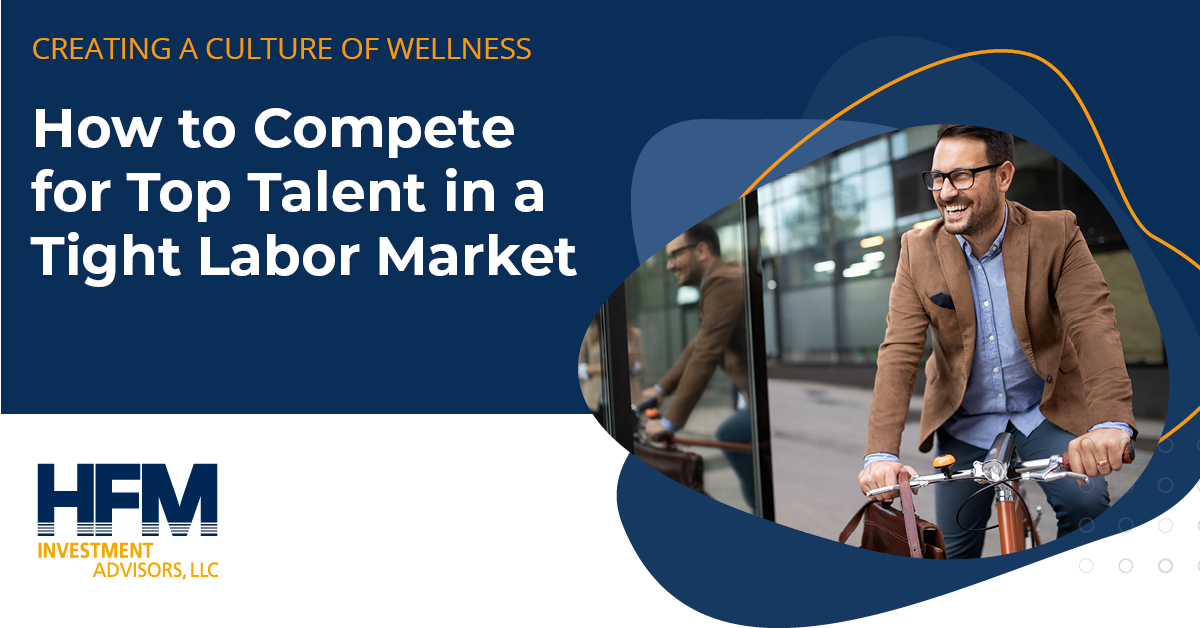
To compete for top talent, companies are looking for innovative ways to stand out in a competitive labor market. Employees are looking for beefed-up benefits that support their social, physical, mental, and financial well-being.
Focusing on employee well-being is a key strategy companies use to compete for top talent. Creating a culture of wellness in the workplace is a trend that’s catching on with employers across the country. Especially with the tight labor market in New Jersey, this could be a way to stand out from the competition. A culture of wellness encourages employee health and well-being holistically by helping them adopt healthier habits in their personal and professional lives, such as exercising consistently, eating more nutritious foods, developing healthy interpersonal relationships, and taking care of their mental health. Cultivating workplace wellness leads to happier, healthier, and more productive employees.
This can result in:
- greater job satisfaction and loyalty
- lower rates of absenteeism
- reduced healthcare premiums
Employees want holistic support including workplace programs that support their social, physical, mental, and financial well-being.[1]
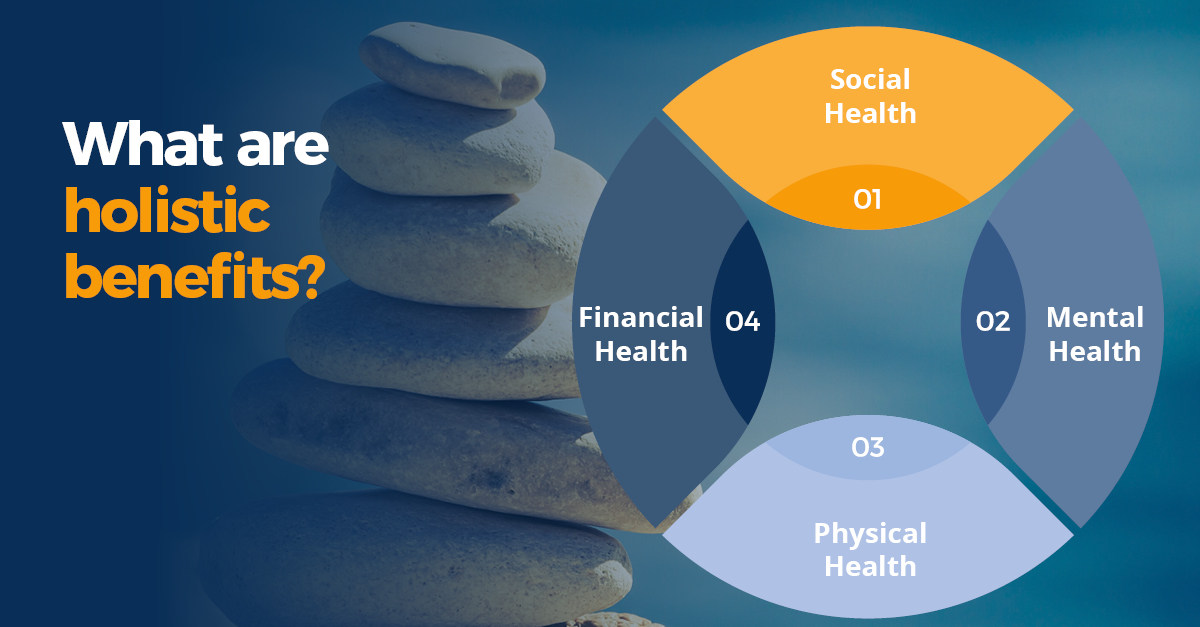
Social Health
Social health is the ability to form satisfying interpersonal relationships with others.
Employers can improve social health by supporting the creation of affinity and employee resource groups (ERGs). These employee-led groups aim to foster a more inclusive, diverse culture.
Generally, ERGs are composed of employees who share common interests, affiliations or identities. These groups help encourage loyalty and greater job satisfaction for employees from diverse backgrounds to feel seen, heard and included.
Additional opportunities to boost social health include encouraging volunteer opportunities, hosting networking and team events (in-person and online for remote employees), while offering family-friendly activities, such as company picnics and scavenger hunts.
Physical Health
Employers can help employees improve their physical health by offering fitness and preventive care programs. Offering perks like on-site fitness facilities or subsidized gym memberships, access to nutrition programs and resources to help employees manage chronic conditions like diabetes and autoimmune diseases are proactive ways to support employees’ physical health. On-site or virtual yoga or group exercise classes are another way to bring employees together and encourage them to focus on getting and staying healthy.
Fitness challenges are another fun way to encourage employees to be more active. It also encourages camaraderie and healthy competition throughout your organization.
Mental Health
No longer taboo, mental health has become a key priority for employers and employees due to the pandemic and recent legislation. Employees’ mental health, which includes psychological and emotional well-being, has experienced a backslide in recent years, with increasing numbers of workers reporting burnout, stress and depression.
Flexibility is a key component of mental health. In fact, workers whose employers support a healthy work/life balance are significantly more likely to say they feel mentally healthy (82%) vs. those that don’t have such flexibility (45%).[2]
Employers unable to accommodate flexible work schedules or remote work options, for instance, may consider offering creative, competitive perks such as:
- More time off
- Expanded benefits menu
- Caregiver subsidies
- Well-being programs
- Commuter or transportation subsidies
- Additional social opportunities
Financial Health
Nearly 60% of employees are stressed about their finances, and 45% can only cover six months’ worth of expenses.[3] Employees want and expect help overcoming money challenges; 66% believe their employers are responsible for their financial well-being.[4]
Employers can meet these expectations by offering financial resources and benefits to help employees prepare for the unexpected, such as emergency savings accounts. Additionally, financial wellness education can reduce money stressors by helping employees gain confidence in their money management skills and cultivate good spending and savings habits. Providing access to a financial advisor can help ease employees’ anxiety about money so they can be more focused, productive and happier in their personal and professional lives.
Getting Started
Creating a culture of wellness in the workplace is designed to promote healthier lifestyles for employees and improve the overall social, physical, mental and financial health of your workforce. If you’re considering launching a workplace wellness program, here are some helpful tips to get started:
- Start small: Pick one or two programs and build from there.
- Get employees’ input: Survey your workforce to find out what they want and what would be most helpful.
- Make it fun: Prizes and competitions can help encourage participation.
- Promote the program to boost engagement: Send regular reminders and updates about wellness activities and let employees know how they can get involved.
- Get leadership buy-in: Leaders must be on board for wellness programs to succeed.
Take the first step towards creating a culture of wellness by requesting information on our retirement plan services.
HFM Investment Advisors, LLC.
856-232-2270
401kteam@hfmadvisors.com
102 West High Street Suite 200, Glassboro, NJ 08028
Investment advisory services are offered through HFM Investment Advisors, LLC, a registered investment adviser. Please remember that securities cannot be purchased, sold or traded via e-mail or voice message system. This email transmission and any documents, files, or previous email messages attached to it may contain information that is confidential or legally privileged. If you are not the intended recipient, you are hereby notified that you must not read this transmission and that any disclosure, copying, printing, distribution, or any action or omission of this transmission is strictly prohibited. If you have received this transmission in error, please immediately notify the sender by telephone at 856-232-2270 or return and delete the original transmission and its attachments without reading or saving in any manner.
This information was developed as a general guide to educate plan sponsors and is not intended as authoritative guidance or tax/legal advice. Each plan has unique requirements, and you should consult your attorney or tax advisor for guidance on your specific situation.
©401(k) Marketing, LLC. All rights reserved. Proprietary and confidential. Do not copy or distribute outside original intent.
[1] MetLife. “20th Annual U.S. Employee Benefit Trends Study.” 2022.
[2] MetLife. “20th Annual U.S. Employee Benefit Trends Study.” 2022.
[3] TIAA. “2022 Financial Wellness Survey. 2022.
[4] Employee Benefit Research Institute and Greenwald Research. “2022 Workplace Wellness Survey.” 2022.